
Casino Payment Methods Australia 2026: Complete Comparison Guide
 Available in AU
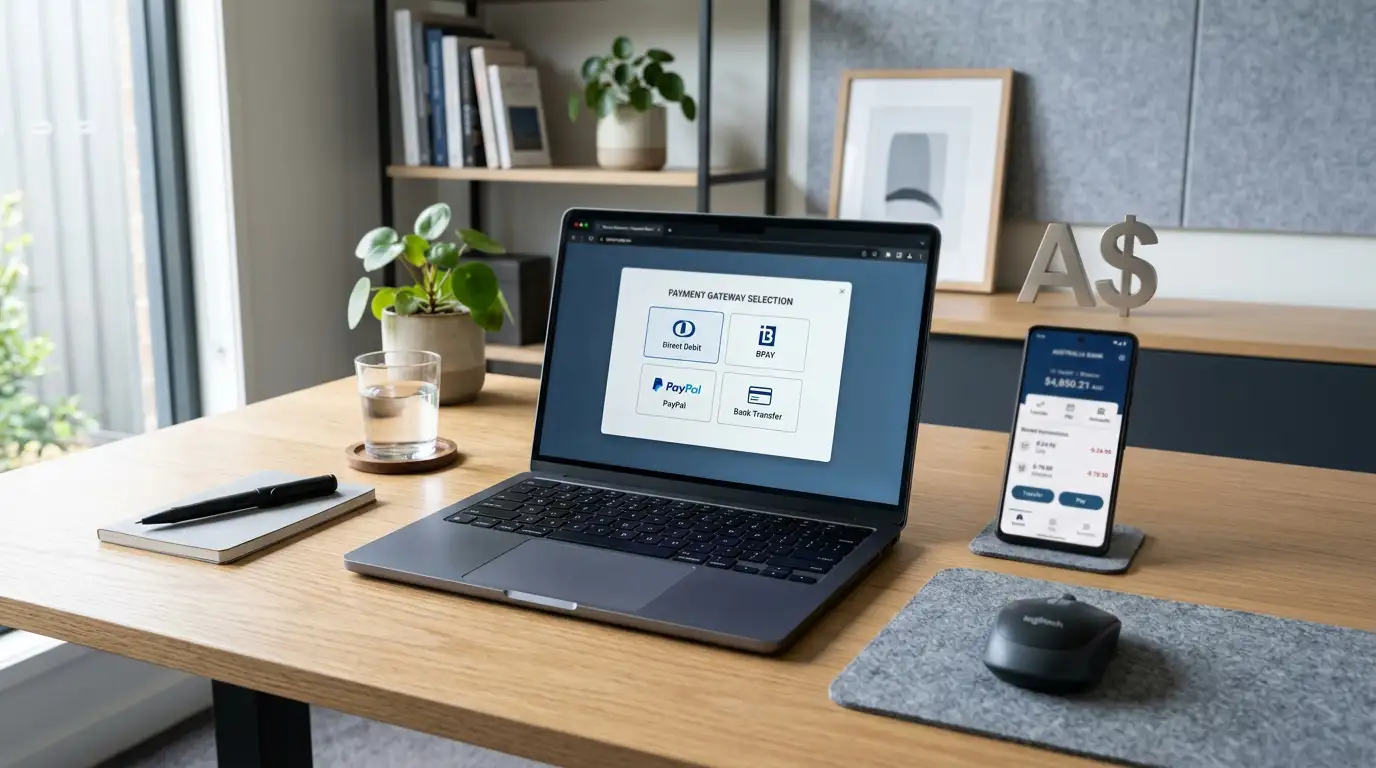
The Australian casino banking landscape shifted dramatically between 2020 and 2026. POLi shut down in October 2022. The big four banks started blocking gambling transactions on cards that previously worked. PayID went from niche to dominant in under three years. Crypto withdrawals now clear faster than most e-wallets.
If you last deposited at an offshore casino in 2019, half the methods you used then either no longer exist or hit friction you did not see coming. The method that works best for an Australian player in 2026 is not the one marketing pages push hardest. Speed matters. Fees matter more than sites admit. Bank blocks are real, not theoretical.
The list below covers fifteen payment methods Australian players encounter at offshore casinos in 2026. For each: what it is, how fast deposits and withdrawals actually clear, what it costs, which banks block it, and who it suits. No casino is “licensed in Australia” under the Interactive Gambling Act 2001—every operator serving Australian players holds an offshore license (Curaçao, Malta, Anjouan). The payment methods discussed are those accepted by these offshore operators.
Payment Methods for Australian Online Casino Players: 2026 Overview
Australian players at offshore casinos in 2026 choose from seven major categories: PayID via the New Payments Platform, cryptocurrency, debit cards (with significant restrictions), e-wallets, prepaid vouchers, traditional bank transfers, and mobile wallets. Each category answers a different priority—speed, privacy, fee avoidance, or working around bank blocks.
The table below compares the seven categories across the factors that actually affect your session: how fast deposits credit, how long withdrawals take, what you pay in fees, and what each method solves best.
| Payment Method | Deposit Speed | Withdrawal Speed | Fees | Best For |
|---|---|---|---|---|
| PayID (NPP) | Instant (< 60 sec) | Same day (25 min – 4 hrs) | Zero | Everyday Australian players; speed + free |
| Cryptocurrency | 10–30 minutes | Under 2 hours (often < 1 hr) | Network only ($0.01–$5) | Fastest cashouts; bank-block workaround |
| Debit Cards (Visa/Mastercard) | Instant (when accepted) | 3–5 business days | Zero (casino); conversion if USD/EUR | Declining viability; major banks block |
| E-Wallets (Skrill, Neteller) | Instant | 1–6 hours | 2.5% withdrawal + 3.99% conversion | Privacy from bank; faster than cards |
| Prepaid Vouchers (Neosurf, Paysafecard) | Instant | Not supported (deposit-only) | 3.5–15% purchase fee | Hard budget cap; no casino on bank statement |
| Bank Transfer (BPAY) | 1–2 business days | 1–2 business days | Usually zero | Backup option; slow |
| Mobile Wallets (Apple Pay, Google Pay) | Instant (rarely accepted) | Not supported | Zero (when accepted) | Limited availability; same card blocks apply |
PayID emerged as the gold standard because it is instant, free, bank-backed, and works for both deposits and withdrawals. Crypto took second place on withdrawal speed alone—most tested Bitcoin and USDT cashouts in 2026 arrived in under an hour. Debit cards, once the default, now face blocks from NAB, CommBank, Westpac, and ANZ on gambling merchant codes. E-wallets (Skrill, Neteller) remain widely accepted but cost 6–7% in combined fees when you withdraw funds back to your Australian bank.
Prepaid vouchers (Neosurf, Paysafecard) solve two problems: they impose a hard spending ceiling (you can only deposit the voucher amount), and your bank statement shows a Coles or newsagent purchase instead of a casino payment. The cost is a 3.5–15% purchase fee depending on denomination. BPAY, Australia’s original bill-payment rail, still works but takes 1–2 business days each way—PayID made it obsolete for real-time gaming. Mobile wallets (Apple Pay, Google Pay) sound convenient but suffer the same merchant-code blocks as the underlying cards, and casino acceptance sits around 10–15%.
POLi, which dominated Australian casino deposits from 2006 to 2020, shut down permanently in October 2022. The reason: the New Payments Platform (NPP) made POLi’s screen-scraping technology redundant, and banks had flagged the security risk of users sharing login credentials with a third party. PayID, built on the NPP, replaced POLi as the instant bank-transfer method Australians now use.
Which Methods Work in 2026, and Which Are Dead or Blocked?
Active and widely accepted:
- PayID / OSKO (NPP): every major Australian bank, near-universal offshore casino acceptance
- Cryptocurrency (BTC, ETH, USDT, LTC): ~80–90% of offshore casinos
- Skrill and Neteller: ~80–90% acceptance
- Neosurf and Paysafecard: ~50–60% acceptance
- Visa and Mastercard debit: listed everywhere, but bank blocks make success rate inconsistent
Dead:
- POLi: shut down 15 October 2022; any site still listing it is outdated or fraudulent
Blocked or severely restricted:
- Credit cards: banned for Australian online gambling under 2020 law
- Debit cards at major banks: NAB, CommBank, Westpac, ANZ block merchant category code 7995 (gambling) as of 2026
- PayPal: rarely accepted at offshore casinos (< 10%) due to PayPal's gambling-merchant policy
- Apple Pay and Google Pay: low acceptance (~10–15%), and they inherit the same card blocks
The practical takeaway: if your Australian bank is one of the big four, assume your Visa or Mastercard debit will be declined at most offshore casinos. PayID and crypto are the two methods that route around bank-side gambling blocks entirely.
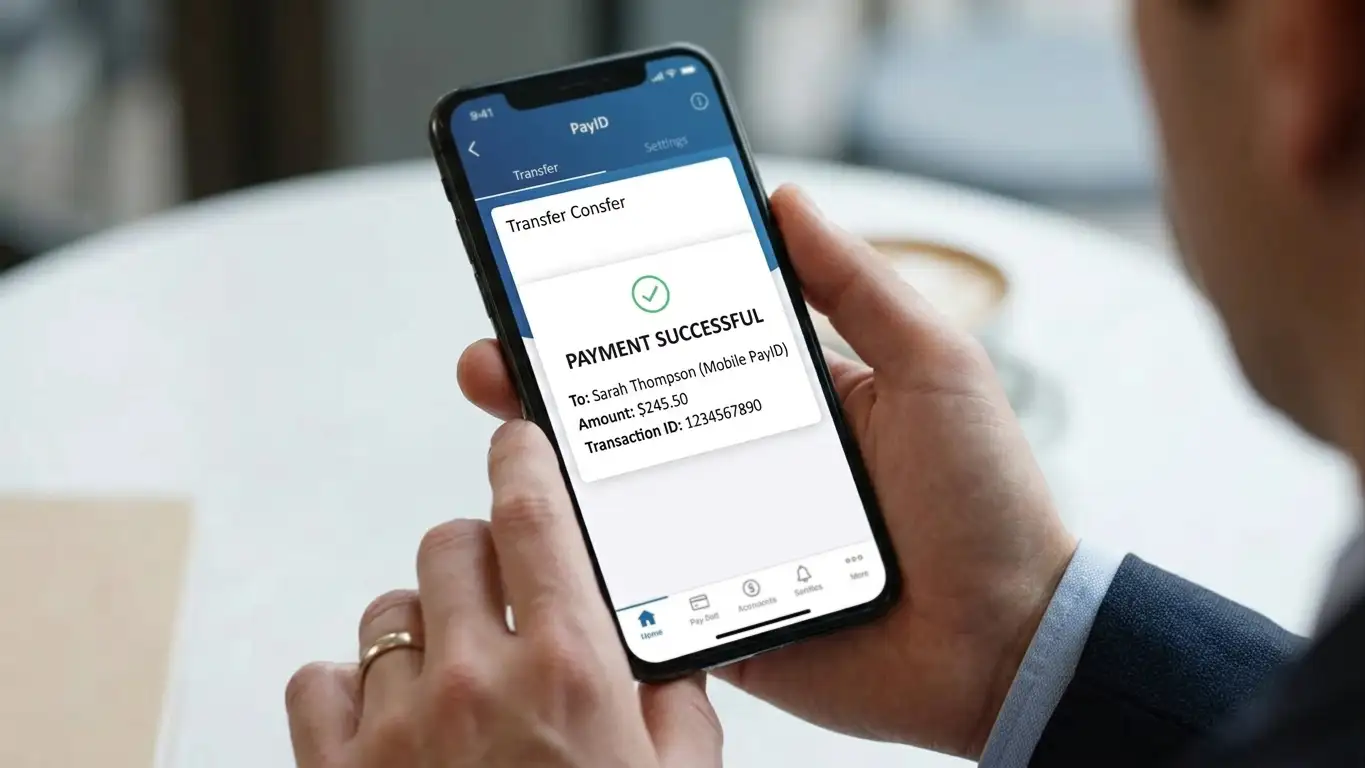
PayID: Australia’s Fastest Casino Payment Method
PayID became the dominant casino payment method for Australian players because it solves three problems at once: it is instant (deposits credit in under a minute, withdrawals arrive same day), it costs nothing (zero fees from banks or casinos), and it is bank-native infrastructure (trusted, secure, no third-party intermediary). Between 2020 and 2026, PayID went from a niche option to the primary deposit rail at offshore casinos serving Australians, directly replacing POLi after that service shut down in 2022.
PayID is not a separate account or app. It is an addressing service that links your email address, mobile number, or Australian Business Number (ABN) to your bank account via the New Payments Platform (NPP). When you pay someone using PayID, you enter their email or mobile instead of a BSB and account number, and the NPP routes the payment in real time through the Reserve Bank of Australia’s Fast Settlement Service. Settlement happens in under fifteen seconds. Confirmation of Payee (CoP) verifies the recipient’s registered name before you send, reducing fraud.
How PayID Works at Online Casinos
At the casino cashier, you select PayID (sometimes listed under “Bank Transfer” or “Instant Bank Transfer”). The casino displays its PayID identifier—usually an email address like [email protected]—and a reference code unique to your account. You open your Australian banking app, initiate a PayID transfer to that email, enter the reference code in the description field exactly as shown, and send the amount. The casino credits your balance within 30 to 90 seconds once the NPP confirms settlement.
For withdrawals, the process reverses. You request a PayID withdrawal at the casino, entering your own PayID (the email or mobile linked to your bank account). The casino processes the request—timing varies by operator, from 25 minutes to 4 hours in tested examples from 2026—and sends funds to your PayID. The money arrives in your Australian bank account the same day. No intermediate e-wallet, no currency conversion, no withdrawal fee from the casino or the bank.
The most common PayID issue is a bank-name mismatch. When you register at a casino, the name on your account must match the name registered to your PayID at your bank exactly—character for character, including middle names or initials. If your casino profile says “John Smith” but your bank account is registered as “John A. Smith,” the casino’s payment processor flags the withdrawal during KYC verification and holds it until you upload proof that both accounts belong to you. Fixing this takes 12 to 48 hours. The workaround: before your first deposit, check your banking app to see exactly how your name appears on your PayID registration, and use that exact wording when you sign up at the casino.
PayID works with every major Australian bank as of 2026: Commonwealth Bank, NAB, Westpac, ANZ, Bendigo Bank, Macquarie, ING, Up, 86 400, and over 100 participating financial institutions. Daily transfer limits vary by bank—most impose a $1,000 to $10,000 daily cap on NPP payments. Some banks apply lower limits when the payee name contains certain keywords, but this is inconsistent and not tied to the gambling merchant code (PayID transfers do not carry MCC tags the way card payments do). If your PayID transfer to a casino is declined, the issue is usually your bank’s daily NPP limit, not a gambling-specific block.
PayID Deposit Process
Depositing via PayID at an offshore casino takes five steps and completes in under two minutes:
- At the casino cashier, select PayID or Instant Bank Transfer
- Note the casino’s PayID email address and your unique reference code
- Open your Australian banking app and choose “Pay anyone” or “PayID payment”
- Enter the casino’s PayID email, the amount, and paste the reference code into the description field
- Confirm and send; the casino credits your balance within 30–90 seconds
The reference code is critical. Without it, the payment reaches the casino’s bank account but cannot auto-match to your casino profile. The casino then holds the funds in a suspense account until you contact support with proof of the transfer. Manual matching can take 6 to 24 hours. Always include the reference code exactly as the casino displays it.
PayID Withdrawal Speed
Withdrawal speed via PayID depends on the casino’s internal processing time, not the NPP itself. The NPP settles transfers in under fifteen seconds, but casinos impose a “pending period” during which they review the withdrawal request—ostensibly for fraud checks, practically to allow players a window to reverse the request and keep playing. Once the pending period ends and the casino releases the payment to the NPP, funds arrive in your Australian bank account within seconds.
Tested withdrawal times at Australian-facing casinos in 2026:
- Hell Spin: 25 minutes total (15-minute pending, 10 minutes to bank)
- Lucky7: 35 minutes total
- LuckyVibe: under 1 hour (stated benchmark)
- Most mid-tier operators: 2 to 4 hours
VIP players at some casinos skip the pending period entirely, bringing total withdrawal time down to under 10 minutes. For non-VIP players, same-day cashouts are standard, and anything longer than 6 hours suggests a verification hold rather than a PayID delay.
PayID vs POLi: What Changed in 2022
POLi dominated Australian casino deposits from 2006 to 2020 because it provided instant bank transfers before PayID existed. The technology was straightforward but controversial: when you selected POLi at a casino, you were redirected to the POLi interface, where you entered your online banking username and password. POLi logged into your bank, initiated a transfer to the casino, and confirmed the deposit instantly. No need to leave the casino, no manual bank transfer, no waiting.
Banks hated it. POLi’s process violated every financial institution’s terms of service, which explicitly prohibit sharing login credentials with third parties. The Australian Payments Clearing Association and APCA member banks publicly advised against using POLi, calling it a security risk. POLi argued it did not store credentials and deleted session data after each transaction, but the fundamental problem remained: users were typing bank passwords into a non-bank interface.
On 15 October 2022, POLi Payments Pty Ltd announced it was shutting down permanently. The official reason was regulatory and technical: the New Payments Platform, which launched in February 2018, had made POLi redundant. PayID, built on the NPP, provided instant bank transfers without requiring users to share passwords. The NPP used bank-native APIs and OAuth-style secure authentication instead of screen scraping. From a security and user-experience perspective, PayID was superior in every dimension, and POLi’s business case evaporated.
Offshore casinos serving Australians transitioned to PayID between 2020 and 2023. By mid-2023, nearly every operator that previously accepted POLi had added PayID to their cashier. As of 2026, any casino site still listing POLi as an active payment method is either fraudulent or has not updated its payment page in over two years. POLi is dead. PayID replaced it.
Is PayID safe to use at online casinos in Australia?
PayID itself is bank-grade secure—it is infrastructure managed by Australian Payments Plus and regulated by the Reserve Bank of Australia. The NPP uses the same security standards as domestic bank transfers. When you send money via PayID, your banking app authenticates you, the NPP verifies the recipient’s registered name via Confirmation of Payee, and settlement happens through the RBA’s Fast Settlement Service. No third party sees your bank login or account credentials.
The risk is not PayID; the risk is the offshore casino at the other end. A Curaçao-licensed casino that accepts PayID deposits is still an offshore operator outside ACMA jurisdiction. Standard due diligence applies: check the casino’s license, read withdrawal reviews, verify KYC requirements before depositing. PayID makes the payment rail secure, but it does not license the casino or guarantee you will be paid.
Why did POLi shut down and what replaced it?
POLi shut down in October 2022 because the New Payments Platform made its screen-scraping technology obsolete. POLi required users to enter their online banking passwords into a third-party interface, which violated bank terms of service and posed a security risk. PayID, built on the NPP, provides instant bank transfers using bank-native APIs and secure authentication. From 2026 onward, PayID is the instant bank-transfer method Australian casino players use.
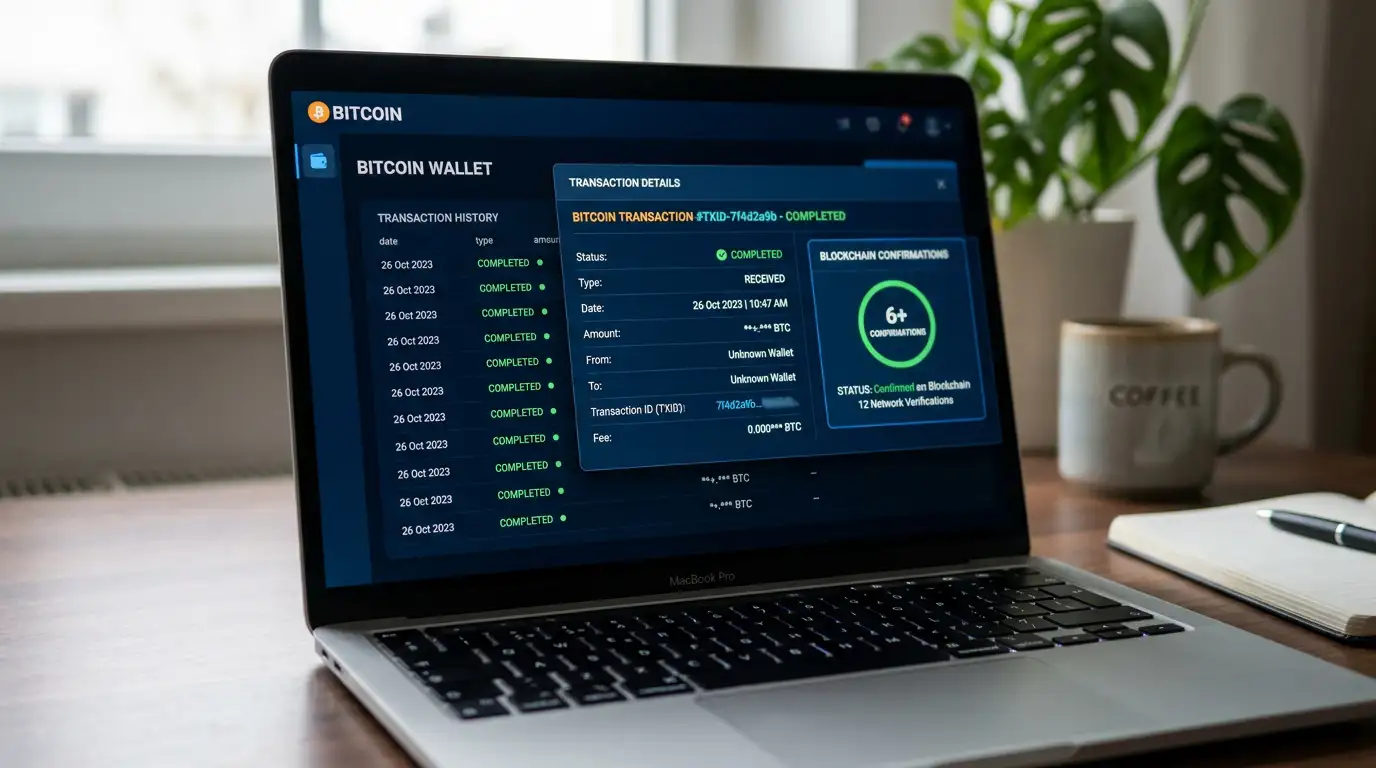
Cryptocurrency for Australian Casino Players
Cryptocurrency became the second most common payment method at Australian-facing offshore casinos because it solves the two problems PayID cannot: it delivers the fastest withdrawals in the industry (most Bitcoin and USDT cashouts clear in under an hour), and it routes around bank-side gambling restrictions entirely (no Australian bank sees a casino payment because the transaction stays on-chain until you convert back to AUD at a local exchange). Six cryptocurrencies dominate casino cashiers in 2026: Bitcoin, Ethereum, Tether, Litecoin, Bitcoin Cash, and Solana.
Speed is the main draw. PayID withdrawals arrive same-day (typically 2 to 4 hours including casino processing). Crypto withdrawals often arrive in under an hour, sometimes under 30 minutes. The casino sends Bitcoin or USDT to your wallet address, the blockchain confirms the transaction in 10 to 30 minutes depending on network congestion, and the funds sit in your non-custodial wallet ready to trade, hold, or convert to AUD at a local exchange. No bank intermediary, no pending period beyond the casino’s internal review, no 3-to-5-business-days card refund window.
The privacy angle is overstated. Crypto transactions are pseudonymous, not anonymous—every Bitcoin or Ethereum transfer is visible on the public blockchain, tied to wallet addresses. Anyone who knows your wallet address can trace your transaction history. Offshore casinos still require KYC (passport or driver’s license plus proof of address) before your first withdrawal, regardless of deposit method. The privacy benefit is not “anonymous gambling” but “clean bank statement”: your Australian bank sees a fiat-to-crypto purchase at CoinSpot or Swyftx, not a casino deposit.
Australian crypto regulation centres on AUSTRAC, the anti-money-laundering regulator. Any Australian cryptocurrency exchange (CoinSpot, Swyftx, BTC Markets, Independent Reserve) must register as a Digital Currency Exchange (DCE) provider with AUSTRAC. Fiat-to-crypto conversions of A$10,000 or more in a single transaction or within a rolling period trigger a reportable transaction under AML/CTF rules. Crypto-to-crypto trades and crypto-to-offshore-casino deposits do not trigger AUSTRAC reporting because the casino is outside Australian jurisdiction. The threshold applies when you convert back to AUD: if you win big and cash out $15,000 worth of Bitcoin to your CoinSpot account in one go, CoinSpot reports it to AUSTRAC as part of routine compliance. Not illegal, just logged.
The table below compares the six most common casino cryptocurrencies on the factors that affect your session: how long deposits take to confirm, typical network fees, price volatility, and what each coin suits best.
| Cryptocurrency | Confirmation Time | Network Fees | Volatility | Best For |
|---|---|---|---|---|
| Bitcoin (BTC) | 10–30 minutes | $1–5 per transaction | High | Most accepted; proven track record |
| Ethereum (ETH) | 2–5 minutes | $2–10 (gas fees variable) | High | Smart contracts; second-largest by market cap |
| Tether (USDT) | 1–3 min (TRC-20); 2–5 min (ERC-20) | ~$1 (TRC-20); $2–10 (ERC-20) | Minimal (USD-pegged) | Speed without volatility; stablecoin |
| Litecoin (LTC) | 5–15 minutes | $0.10–0.50 | Moderate | Lower fees than BTC; faster confirmation |
| Bitcoin Cash (BCH) | 10–30 minutes | $0.01–0.10 | Moderate | Very low fees; BTC fork |
| Solana (SOL) | Under 1 minute | < $0.01 | High | Fastest confirmation; cheapest fees |
Bitcoin remains the most widely accepted—roughly 90% of offshore casinos that accept crypto take BTC. Ethereum comes second at around 80% acceptance. Tether (USDT) is the third pillar, valued for its 1:1 USD peg (price stability) and fast settlement, especially on the Tron blockchain (TRC-20 USDT). Litecoin, Bitcoin Cash, and Solana see acceptance rates around 60–70%, depending on the operator.
Bitcoin (BTC)
Bitcoin launched in January 2009 as the first decentralized cryptocurrency. It operates on a proof-of-work blockchain with a 10-minute average block time and a capped supply of 21 million coins. As of late 2026, Bitcoin trades between A$95,000 and A$105,000, though the price fluctuates daily. Offshore casinos adopted Bitcoin between 2015 and 2020, and it remains the most universally accepted crypto at casino cashiers.
Deposits work like this: you buy Bitcoin at an Australian exchange (CoinSpot, Swyftx, BTC Markets), transfer it to a non-custodial wallet or directly to the casino’s BTC address, and wait for one to three blockchain confirmations. Most casinos credit your balance after one confirmation, which takes 10 to 30 minutes depending on network congestion and the transaction fee you paid. Higher fees incentivize miners to prioritize your transaction, speeding confirmation. A $1 fee is usually sufficient; a $5 fee nearly guarantees inclusion in the next block.
Withdrawals reverse the flow. The casino sends Bitcoin to your wallet address. Confirmation takes 10 to 30 minutes. Total time from withdrawal request to Bitcoin arriving in your wallet typically runs under two hours, often under one hour. Once confirmed, you can hold the Bitcoin in your wallet, trade it for another crypto, or convert it back to AUD at your Australian exchange. Conversion back to AUD takes an additional 1 to 3 business days for the exchange to process the bank transfer, but the casino has already paid you—the delay is on the exchange’s side, not the casino’s.
Bitcoin’s main drawback is volatility. If you win A$5,000 worth of Bitcoin and hold it for two days before converting to AUD, the value can swing $200 up or down (sometimes more during market turbulence). Players who want crypto speed without price risk typically use Tether (USDT) instead.
Ethereum (ETH)
Ethereum launched in July 2015 as a cryptocurrency and smart-contract platform. Unlike Bitcoin, which functions primarily as digital money, Ethereum runs decentralized applications (dApps) on its blockchain. In September 2022, Ethereum transitioned from proof-of-work to proof-of-stake (“The Merge”), reducing energy consumption and changing how new ETH is issued. Block time is roughly 12 seconds, making Ethereum significantly faster than Bitcoin for transaction confirmation.
Casino deposits via Ethereum confirm in 2 to 5 minutes (12 to 30 blocks, depending on the casino’s confirmation requirement). Withdrawals typically arrive in under two hours. Network fees (called “gas”) vary with blockchain congestion—during high-traffic periods, a single Ethereum transaction can cost $10 to $20, though normal conditions see fees between $2 and $5. Gas fees are paid in ETH, deducted automatically from your wallet when you send a transaction.
Ethereum is the second most accepted cryptocurrency at offshore casinos after Bitcoin, with acceptance around 80%. Players choose Ethereum for faster confirmation than Bitcoin and because they already hold ETH in their portfolio. The smart-contract functionality matters less at traditional offshore casinos (which run games on centralized servers) but becomes relevant at decentralized casinos and provably-fair platforms built on Ethereum.
As of late 2026, Ethereum trades between A$3,800 and A$4,200. Like Bitcoin, Ethereum’s price fluctuates, so the same volatility risk applies: convert to AUD quickly after withdrawal unless you intend to hold ETH as an investment.
Tether (USDT)
Tether launched in October 2014 as a stablecoin pegged 1:1 to the US dollar. Each USDT token is backed by reserves held by Tether Limited (cash equivalents, treasury bills, and other assets), though the exact composition and audit transparency have been debated since inception. Tether runs on multiple blockchains—Ethereum (ERC-20), Tron (TRC-20), and others. TRC-20 USDT on the Tron blockchain is the fastest and cheapest variant, with confirmation in 1 to 3 minutes and network fees around $1.
Australian casino players use Tether to get crypto speed without Bitcoin or Ethereum’s price volatility. Because USDT is pegged to the US dollar, $1,000 USDT today is worth $1,000 USDT tomorrow (minor fluctuations of 1–2 cents occasionally occur during market stress, but deviations are short-lived). This makes USDT practical for players who want fast withdrawals and plan to convert back to AUD within a few days—no risk that your $5,000 cashout becomes $4,700 because the market dropped.
Casino acceptance for Tether sits around 70–80%, especially at crypto-focused operators. Deposits and withdrawals are straightforward: buy USDT at an Australian exchange, send it to the casino (make sure you use the correct blockchain—if the casino lists TRC-20, send TRC-20 USDT, not ERC-20), and funds credit within a few minutes. Withdrawals typically arrive in under an hour. When you convert USDT back to AUD at your exchange, the rate is the current USD/AUD exchange rate (roughly A$1.55 per USDT as of 2026), plus the exchange’s spread.
Litecoin (LTC)
Litecoin launched in October 2011 as a “lighter” alternative to Bitcoin—faster block time (2.5 minutes versus Bitcoin’s 10 minutes), lower transaction fees, and the same proof-of-work security model. The pitch was “silver to Bitcoin’s gold.” Litecoin never achieved Bitcoin’s market dominance, but it carved a niche as the budget crypto for players who want Bitcoin-like security without Bitcoin-level fees.
Deposits via Litecoin confirm in 5 to 15 minutes. Withdrawals land in your wallet within two hours, often under one hour. Network fees are typically $0.10 to $0.50 per transaction—significantly cheaper than Bitcoin’s $1 to $5 and Ethereum’s variable gas fees. Casino acceptance sits around 60–70%, lower than BTC and ETH but still widely available.
Litecoin trades around A$130 to A$150 as of late 2026. Price volatility is moderate—less wild than Bitcoin but still present. Players choose Litecoin when they want crypto withdrawals faster than PayID, fees lower than Bitcoin, and do not need the universal acceptance BTC offers. If the casino lists Litecoin, it works well. If it does not, you fall back to Bitcoin.
Bitcoin Cash (BCH)
Bitcoin Cash launched in August 2017 as a hard fork of Bitcoin. The split happened because a group of developers wanted larger block sizes to process more transactions per block, reducing fees and increasing throughput. Bitcoin Cash blocks can hold up to 32 MB of transaction data versus Bitcoin’s 1 MB, resulting in very low fees (typically $0.01 to $0.10 per transaction) and faster processing during high-traffic periods.
Casino adoption is moderate—around 50–60% of crypto-friendly operators accept BCH. Confirmation time is similar to Bitcoin (10 to 30 minutes), but the lower fees make Bitcoin Cash attractive for players who deposit and withdraw frequently. Price sits around A$600 to A$700 as of late 2026, with moderate volatility.
The main reason to use Bitcoin Cash over Bitcoin is fee savings. If you deposit $500 five times a month, paying $5 in Bitcoin fees each time costs you $25. Bitcoin Cash fees for the same five deposits total under $1. The trade-off is lower acceptance—if your preferred casino does not list BCH, you use Bitcoin instead.
Solana (SOL)
Solana launched in March 2020 as a high-speed blockchain optimized for throughput. Block time is under one second, and transaction fees are typically less than $0.01. Solana uses a proof-of-stake consensus mechanism and processes thousands of transactions per second, far exceeding Bitcoin and Ethereum’s capacity. The trade-off is a shorter track record and occasional network outages (Solana experienced several hours-long downtimes in 2021 and 2022, though stability improved by 2026).
Casino acceptance for Solana is lower than the other five coins—around 40–50%—but growing. Players who use Solana prioritize speed and cost: deposits confirm in under a minute, withdrawals land almost instantly after the casino releases the payment, and fees are negligible. Price volatility is high (Solana trades between A$200 and A$300 as of late 2026, but swings 10–20% in a week are common), so the same rule applies: convert to AUD quickly unless you intend to hold SOL.
Is cryptocurrency legal for Australian online casino players?
Yes. Australian residents can legally buy, hold, and trade cryptocurrency. Using crypto to deposit at offshore casinos is not prohibited under Australian law—the Interactive Gambling Act 2001 targets operators offering casino services to Australians, not players choosing their payment method. AUSTRAC regulates Australian crypto exchanges (requiring DCE registration and AML/CTF compliance), but transacting in cryptocurrency itself is lawful.
The regulatory threshold that matters: fiat-to-crypto conversions of A$10,000 or more in a single transaction are reportable to AUSTRAC. If you win $15,000 worth of Bitcoin at a casino and convert it all at once on CoinSpot, CoinSpot reports the transaction. Not illegal—routine compliance. Crypto-to-crypto trades and crypto-to-casino deposits do not trigger reporting because they stay on-chain.
What is the fastest withdrawal method for Australian online casino players?
Cryptocurrency withdrawals are the fastest, typically arriving in under two hours and often under one hour. Bitcoin and USDT (TRC-20) cashouts tested in 2026 cleared in 30 to 60 minutes from withdrawal request to wallet confirmation. PayID comes second, with same-day settlement (25 minutes to 4 hours depending on the casino). E-wallets like Skrill and Neteller take 1 to 6 hours. Debit cards take 3 to 5 business days. For speed alone, crypto wins.
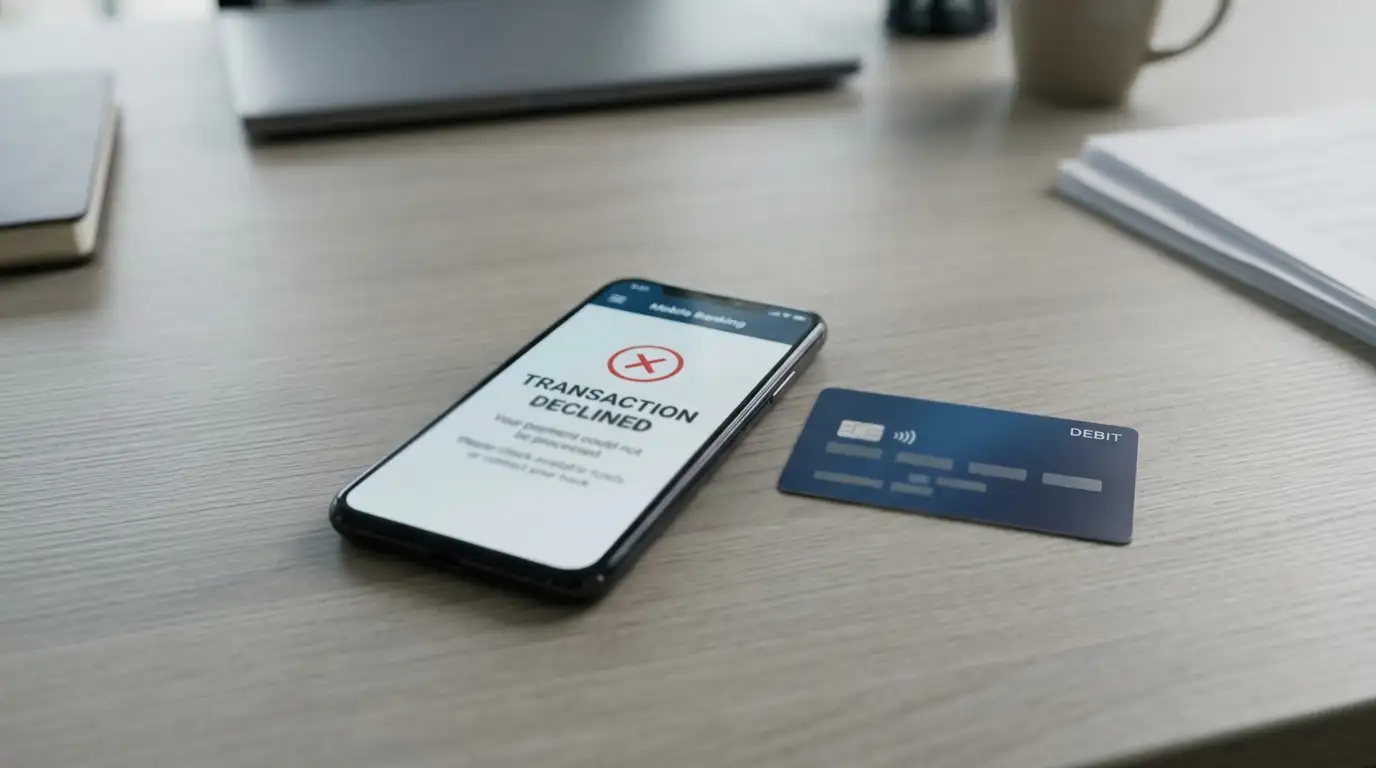
Debit Cards: What Works and What Doesn’t in 2026
Visa and Mastercard debit cards were the default casino payment method for Australian players until 2020. Familiar, instant deposits, straightforward cashier interface—everyone had a debit card, and it worked. Between 2020 and 2026, that changed. The Australian government banned credit cards for online gambling. The major banks extended the block to debit cards voluntarily, targeting the gambling merchant category code (MCC 7995) that card networks assign to casino transactions. By 2026, most Australian debit cards are declined at offshore casino cashiers, not because the card or the casino is broken, but because the issuing bank blocks the transaction before it reaches the casino.
The 2020 credit card ban was federal law. The National Consumer Credit Protection Amendment (Supporting Economic Recovery) Act 2020 prohibited the use of credit cards for online gambling, citing consumer protection and problem-gambling concerns. The law applies to credit cards issued by Australian financial institutions and used at gambling merchants. Debit cards were not included in the legislation—they pull funds from your own bank account, not a line of credit.
The major banks—NAB, Commonwealth Bank, Westpac, and ANZ—went further. Between 2020 and 2023, all four implemented voluntary policies blocking debit card transactions to MCC 7995 (the Visa and Mastercard merchant category code for gambling). The banks framed this as responsible banking and harm minimization, though no law required it. Smaller banks (Bendigo, Macquarie, regional credit unions) have been inconsistent: some block, some do not, and policies change without notice.
MCC 7995 is how card networks classify gambling merchants. When you attempt a debit card deposit at an offshore casino, the transaction request includes the merchant’s MCC. Your bank’s payment processor reads the code and either approves or declines based on the bank’s policy. If the bank has flagged MCC 7995 for automatic decline, the transaction fails before the casino even sees it. The casino cashier displays an error (“transaction declined” or “contact your bank”), and your card remains charged nothing.
Some offshore casinos process card payments under alternative merchant codes—”digital goods” (MCC 5815) or “online services”—to bypass gambling blocks. Success varies. When it works, your deposit clears and your bank statement shows a generic merchant name instead of the casino. When it fails, the transaction is declined, and repeated attempts can flag your account for review. This is not reliable. The casino’s payment processor occasionally rotates merchant codes to avoid detection, and banks update their filters. A card that worked last month may be declined this month.
The table below shows the debit-card block status at major Australian banks as of 2026. Credit cards are universally banned under federal law. Debit card policies are voluntary bank decisions and can change without notice.
| Bank | Debit Card Block (MCC 7995) | Credit Card Ban | Workaround Available |
|---|---|---|---|
| NAB | Yes (blocks most gambling transactions) | Yes (federal ban) | Use PayID or crypto |
| Commonwealth Bank | Yes (blocks most gambling transactions) | Yes (federal ban) | Use PayID or crypto |
| Westpac | Yes (blocks most gambling transactions) | Yes (federal ban) | Use PayID or crypto |
| ANZ | Yes (blocks most gambling transactions) | Yes (federal ban) | Use PayID or crypto |
| Bendigo Bank | Inconsistent (reports vary) | Yes (federal ban) | May work; test deposit $10 first |
| Macquarie | Inconsistent (reports vary) | Yes (federal ban) | May work; test deposit $10 first |
| Smaller banks / credit unions | Varies by institution | Yes (federal ban) | Check with small test deposit |
If you bank with NAB, CommBank, Westpac, or ANZ, assume your debit card will be declined at most offshore casinos. If your bank is Bendigo, Macquarie, or a smaller institution, your card may work—test with a $10 deposit before attempting a larger amount. If declined, switch to PayID or cryptocurrency. Do not attempt multiple retries on a blocked card; banks flag repeat declines as potential fraud and may lock your card for manual review.
Visa and Mastercard Debit Cards
Visa and Mastercard are payment networks, not banks. Your debit card is issued by an Australian bank (NAB, CommBank, Westpac, etc.) and carries the Visa or Mastercard logo, which means it can be processed through either network’s global infrastructure. When you enter your card details at a casino cashier—16-digit card number, CVV, expiry date—the transaction request routes through the Visa or Mastercard network to your bank’s payment processor, which approves or declines based on available funds, fraud filters, and merchant-category policies.
Deposits, when accepted, are instant. You enter your card, the casino charges the amount, and your balance credits within seconds. Withdrawals take 3 to 5 business days. The casino initiates a refund to the original card, the card network processes the reversal, and your bank posts the credit 3 to 5 days later. Many offshore casinos do not support card withdrawals for Australian players—when they do not, you must nominate an alternative method (PayID, crypto, e-wallet) for cashouts even if you deposited by card.
Fees are typically zero from the casino, but currency conversion applies if the casino processes in USD or EUR. Visa and Mastercard charge a wholesale foreign-exchange rate plus a margin (usually 1–3%), and your bank may add its own foreign-transaction fee. If you deposit $100 AUD and the casino processes in USD, expect $2 to $4 in conversion cost depending on the exchange rate and bank markup. Casinos that process in AUD avoid this entirely.
The practical reality in 2026: debit cards are listed at every offshore casino, but success rates for Australian players are low. If your card is declined, the issue is your bank’s MCC 7995 block, not the casino. PayID and crypto route around this entirely because they do not pass through card networks or carry merchant-category codes.
Bank Restrictions: Which Australian Banks Block Gambling Transactions
NAB, Commonwealth Bank, Westpac, and ANZ block most debit card transactions to gambling merchants (MCC 7995) as of 2026. These blocks are voluntary bank policies, not federal law. The 2020 credit card ban applies to credit cards only; debit cards remain legal for online gambling, but the banks chose to restrict them anyway under responsible-banking and harm-minimization frameworks.
The block works at the payment-processor level. When you attempt a card deposit at an offshore casino, the transaction request includes the merchant’s category code. Your bank’s processor reads MCC 7995, checks the block list, and auto-declines. The transaction never reaches the casino. You see “transaction declined” at the cashier, your card is not charged, and repeated attempts will not change the outcome. The only solution is a different payment method.
Smaller banks have inconsistent policies. Bendigo Bank and Macquarie have been reported to allow some gambling transactions, but this varies by account type, cardholder history, and undisclosed internal filters. Regional credit unions and challenger banks (Up, 86 400) follow their own rules. Some block, some do not. The only way to know is a test deposit. If declined, assume your card will not work at that casino and switch to PayID.
One workaround occasionally surfaces: some offshore casinos process card payments under alternative merchant codes (not MCC 7995). When this works, your bank does not recognise the transaction as gambling and approves it. Your bank statement shows a generic merchant name. This is not reliable. Payment processors rotate codes to avoid detection, banks update their filters, and what worked last month may fail this month. Do not rely on it. If your card is declined once, switch to PayID or crypto permanently.
Credit Card Ban Explained
The National Consumer Credit Protection Amendment (Supporting Economic Recovery) Act 2020, which took effect in September 2020, prohibits the use of credit cards for online gambling in Australia. The law applies to credit cards issued by Australian banks and used at gambling merchants. The intent was consumer protection: credit cards enable players to gamble with borrowed money, increasing debt and problem-gambling risk. Debit cards, which pull from existing funds, were not included in the ban.
Offshore casinos removed credit cards from their payment options for Australian players after the ban. If you see a “credit card” option at an offshore casino cashier in 2026, it is either mislabeled (it is actually a debit card option) or the casino is not enforcing Australian compliance. The federal ban applies to the card issuer, not the player—using a credit card at an offshore casino is not a criminal offence for the individual, but Australian banks will decline the transaction under legal obligation.
Debit cards remain legal. The confusion arises because the major banks block debit cards to gambling merchants voluntarily, and players conflate the voluntary bank policy with the federal credit card ban. They are separate. Credit cards: federally banned. Debit cards: legal but often blocked by bank policy.
Card Deposits vs Withdrawals
Deposits via debit card, when successful, are instant. Withdrawals take 3 to 5 business days and are not universally supported. Many offshore casinos do not process withdrawals back to Australian debit cards due to payment-processor restrictions or bank refusal to accept gambling refunds. When card withdrawals are not available, you must nominate an alternative method—PayID, cryptocurrency, or e-wallet—for cashouts even if you deposited by card.
The asymmetry creates a practical problem. You deposit $500 by card. You win $1,200. You request a withdrawal and discover the casino does not support card payouts for Australian players. You must now set up PayID or buy cryptocurrency or create a Skrill account to receive your winnings. This adds 6 to 24 hours of setup time, plus identity verification at the new payment method, before your cashout processes. Better to deposit via a bi-directional method (PayID, crypto, e-wallet) from the start.
Do Australian banks block online casino deposits?
Yes, the four major Australian banks (NAB, CommBank, Westpaq, ANZ) block most debit card transactions to gambling merchants as of 2026. The blocks are voluntary bank policies, not federal law (the 2020 federal ban applies to credit cards only). The banks target merchant category code 7995, which Visa and Mastercard assign to gambling transactions. When you attempt a card deposit at an offshore casino, your bank’s payment processor auto-declines if MCC 7995 is flagged. Smaller banks (Bendigo, Macquarie) are inconsistent. PayID and cryptocurrency bypass bank-side gambling blocks entirely.
Can I use credit cards for online gambling in Australia?
No. The National Consumer Credit Protection Amendment Act 2020 prohibits the use of credit cards for online gambling. The ban applies to credit cards issued by Australian banks and took effect in September 2020. Debit cards remain legal but are often blocked by major banks under voluntary policies. If you attempt to use a credit card at an offshore casino in 2026, the transaction will be declined by your bank under federal law.

E-Wallets: Skrill, Neteller and Alternatives
E-wallets sit between your bank account and the casino, acting as a buffer layer. You load funds from your Australian bank or debit card into the e-wallet once, then use the e-wallet balance to deposit at casinos without repeatedly entering card details or bank credentials. Withdrawals from the casino go back to your e-wallet in 1 to 6 hours, significantly faster than the 3-to-5-business-days card refunds. When you want to convert e-wallet balance back to AUD, you withdraw from the e-wallet to your Australian bank account, which takes an additional 1 to 3 days.
The privacy benefit: your Australian bank sees “Skrill” or “Neteller” on your statement, not the casino name. The casino never receives your bank details or card number. The cost: e-wallets charge fees at multiple steps. Skrill and Neteller, the two most widely accepted at offshore casinos, charge zero for deposits into the e-wallet and zero for casino deposits, but charge 2.5% when you withdraw from the e-wallet back to your Australian bank, plus 3.99% for currency conversion if your e-wallet balance is in EUR or USD. Total cost: around 6–7% of your withdrawal amount. PayID and crypto cost nothing by comparison.
Five e-wallets see regular use at Australian-facing offshore casinos in 2026: Skrill, Neteller, PayPal (rare), ecoPayz (now rebranded Payz), and MiFinity. Skrill and Neteller dominate, with acceptance around 80–90% of operators. PayPal acceptance is under 10% due to PayPal’s gambling-merchant policy. ecoPayz and MiFinity sit around 40–50% acceptance and appeal to players seeking alternatives to the Skrill/Neteller duopoly.
The table below compares the five e-wallets on the factors that affect Australian players: deposit speed, withdrawal speed from casino to e-wallet, total fees to cash out in AUD, casino acceptance, and whether the e-wallet qualifies for casino welcome bonuses (many casinos exclude e-wallet deposits from bonus eligibility to prevent bonus abuse).
| E-Wallet | Deposit Speed | Withdrawal Speed (Casino to E-Wallet) | Total Fees (E-Wallet to AUD Bank) | Casino Acceptance | Bonus Eligibility |
|---|---|---|---|---|---|
| Skrill | Instant | 1–6 hours | 2.5% withdrawal + 3.99% conversion ≈ 6.4% | ~80–90% | Excluded at ~40–50% of casinos |
| Neteller | Instant | 1–6 hours | 2.5% withdrawal + 3.99% conversion ≈ 6.4% | ~80–90% | Excluded at ~40–50% of casinos |
| PayPal | Instant (when accepted) | 1–24 hours | ~2% (varies by casino/region) | < 10% (rare) | Usually eligible when accepted |
| ecoPayz (Payz) | Instant | 1–6 hours | Similar to Skrill (~5–7%) | ~40–50% | Varies by casino |
| MiFinity | Instant | 1–6 hours | Competitive (lower than Skrill) | ~40–50% | Varies by casino |
Skrill and Neteller are sister companies (both owned by Paysafe Group) and operate nearly identically. Fees, speeds, and acceptance are the same. Players pick one or the other based on which they set up first, though having both can be useful when a casino excludes one from a promotion but not the other. Neteller offers a physical prepaid Mastercard (Net+ Card) linked to your e-wallet balance, which Skrill does not.
Skrill
Skrill launched in 2001 as Moneybookers, rebranded to Skrill in 2011, and was acquired by Paysafe Group in 2015. It holds an e-money institution license from the UK Financial Conduct Authority (FCA) and operates in over 200 countries. Skrill is the most widely accepted e-wallet at offshore casinos, with near-universal availability at operators serving Australian players.
Setting up Skrill takes 10 minutes. You visit Skrill.com, create an account with your email, verify your identity (passport or driver’s license plus proof of address), and link your Australian bank account or debit card. Verification typically completes within 24 hours. Once verified, you load funds from your bank to Skrill (free, 1–3 business days) or from your debit card to Skrill (instant, sometimes a small fee depending on the card issuer). Your Skrill balance sits in the e-wallet ready to use.
At the casino cashier, you select Skrill, log into your Skrill account to authorise the payment, and the casino credits your balance instantly. Withdrawals work in reverse: the casino sends funds to your Skrill account, which arrive in 1 to 6 hours (average around 3 hours). Once in Skrill, you can hold the balance, use it at another casino, or withdraw to your Australian bank account. Withdrawal from Skrill to your bank costs 2.5% of the amount and takes 1 to 3 business days.
Currency conversion is where Skrill’s fees bite. If your casino balance is in EUR or USD (common at offshore operators), Skrill converts it to your e-wallet’s base currency at a 3.99% markup over the mid-market rate. If your Skrill account is set to AUD, and the casino pays you in EUR, Skrill automatically converts at 3.99%. Combined with the 2.5% bank withdrawal fee, you lose roughly 6.4% when cashing out. PayID costs nothing. Crypto costs only the network fee ($0.01 to $5). That 6.4% adds up: on a $1,000 cashout, you pay $64 in Skrill fees.
Bonus eligibility is inconsistent. Roughly 40–50% of offshore casinos exclude Skrill deposits from welcome bonuses, citing abuse prevention (players deposit via Skrill, claim the bonus, and attempt a Skrill chargeback after losing, though Skrill disputes are harder to win than card chargebacks). Always check the bonus terms before depositing. If Skrill is excluded, use PayID or crypto to qualify.
Neteller
Neteller launched in 1999 in Canada and was acquired by Paysafe Group in 2015 alongside Skrill. Functionally, Neteller is identical to Skrill: same fee structure (2.5% withdrawal + 3.99% conversion), same casino acceptance (~80–90%), same 1-to-6-hour withdrawal speed. The only notable difference is the Net+ Mastercard—a physical prepaid card linked to your Neteller balance that you can use at ATMs or point-of-sale terminals worldwide.
Australian players choose Neteller for the same reason they choose Skrill: privacy (bank statement shows “Neteller” not the casino), speed (1–6 hours vs 3–5 days for cards), and wide acceptance. Setup is identical—create account, verify identity, link Australian bank or card, load funds, use at casino. Fees are the same 6–7% total when you cash out to AUD.
The Net+ Mastercard can be useful if you want to spend e-wallet balance directly without withdrawing to your bank first. Order the card through your Neteller account, load it with your Neteller balance, and use it like any prepaid Mastercard. ATM withdrawal fees apply (check Neteller’s schedule), and the card carries a small monthly maintenance fee if unused. Most players skip the card and withdraw directly to their bank.
Bonus exclusions mirror Skrill—around 40–50% of casinos block Neteller from welcome offers. If you already have Skrill and the casino excludes it from the bonus, check if Neteller is allowed. Sometimes one is excluded and the other is not, though this is rare (most casinos that exclude Skrill also exclude Neteller because both are Paysafe products).
PayPal
PayPal is the largest e-wallet globally, with over 400 million users, but it is rarely accepted at offshore casinos. PayPal’s Acceptable Use Policy explicitly restricts gambling merchants unless PayPal has negotiated a specific agreement with a licensed operator. Those agreements primarily exist with casinos licensed in the UK, select EU jurisdictions, and a handful of US states where online gambling is legal. Offshore casinos licensed in Curaçao or Anjouan do not have PayPal agreements, so PayPal appears at fewer than 10% of the casinos Australian players use.
When PayPal is accepted, it works like Skrill: instant deposits, withdrawals in 1 to 24 hours, and fees around 2% (lower than Skrill’s 6.4% but varies by casino and region). PayPal deposits usually qualify for casino bonuses because PayPal’s anti-abuse and chargeback systems are robust—casinos trust PayPal more than they trust Skrill or Neteller.
The practical takeaway: do not plan on using PayPal at offshore casinos. If you happen to find a casino that accepts it, consider it a bonus, but build your payment strategy around PayID, crypto, Skrill, or Neteller instead.
ecoPayz (Payz)
ecoPayz launched in the early 2000s and rebranded to Payz in recent years. It is a UK-based e-wallet licensed by the Financial Conduct Authority and operates similarly to Skrill and Neteller: you load funds from your bank or card, deposit at the casino, withdraw to your e-wallet in 1 to 6 hours, and cash out to your Australian bank with fees similar to Skrill (around 5–7% total when accounting for currency conversion and withdrawal fees).
Casino acceptance sits around 40–50%, lower than Skrill/Neteller but growing. ecoPayz appeals to players who want an alternative to the Skrill/Neteller duopoly or whose casino excludes those e-wallets from bonuses. Setup is straightforward: create account at Payz.com (formerly ecoPayz.com), verify identity, link bank or card, load funds. Multi-currency accounts are available, which can reduce conversion fees if you hold balances in EUR, USD, and AUD simultaneously and deposit in the currency the casino uses.
Bonus eligibility varies by casino. Some exclude ecoPayz alongside Skrill/Neteller; others allow it. Check terms before depositing.
MiFinity
MiFinity launched in 2015 and carved a niche at crypto-friendly offshore casinos. It operates as both an e-wallet and a virtual Mastercard—you can load funds into your MiFinity account and use them for casino deposits, or generate a virtual Mastercard linked to your MiFinity balance for online purchases. Fees are competitive, often lower than Skrill’s 6.4% total, though exact rates vary by transaction type and currency.
Casino acceptance is around 40–50%, concentrated at operators that also accept cryptocurrency. MiFinity’s virtual card option makes it versatile: if a casino does not list MiFinity as a direct e-wallet option but accepts Mastercard, you can sometimes use the MiFinity virtual card (though this brings the card-block risks discussed earlier). Withdrawals from casino to MiFinity take 1 to 6 hours. Cashing out from MiFinity to your Australian bank takes 1 to 3 days with a withdrawal fee.
Setup: visit MiFinity.com, create account, verify identity, link bank or card. The virtual Mastercard generates instantly once your account is funded. Bonus eligibility varies—some casinos treat MiFinity like Skrill (excluded), others allow it.
What is the difference between Skrill and Neteller?
Skrill and Neteller are sister companies owned by Paysafe Group and operate nearly identically. Fees are the same (2.5% withdrawal to bank + 3.99% currency conversion), casino acceptance is the same (~80–90%), and withdrawal speeds are the same (1–6 hours). The only notable difference is Neteller’s Net+ Mastercard—a physical prepaid card you can use at ATMs and stores worldwide. Most Australian players pick whichever they set up first, as both work identically for casino deposits and withdrawals.

Prepaid Vouchers: Neosurf, Paysafecard and Privacy Options
Prepaid vouchers solve two problems e-wallets cannot: they impose a hard spending ceiling (you can only deposit the value loaded on the voucher, no more), and they keep the casino name off your bank statement entirely (your bank sees a Coles or newsagent purchase, not a gambling payment). The cost is a purchase fee of 3.5% to 15% depending on the voucher denomination, and vouchers are deposit-only—you cannot withdraw casino winnings back to a voucher. Withdrawals require an alternative method (PayID, crypto, e-wallet, or bank transfer).
Four prepaid vouchers see use at Australian-facing offshore casinos in 2026: Neosurf (the most widely available), Paysafecard, CashtoCode, and Flexepin. All work the same way: you buy a voucher at a physical retailer (supermarket, service station, newsagent) or occasionally online, receive a PIN code, enter the PIN at the casino cashier, and your balance credits instantly. The voucher value is fixed at purchase—common denominations are A$10, A$20, A$50, A$100—and you pay the face value plus a purchase fee at the register.
Vouchers suit two player profiles: those who want a hard session budget (buy a $50 Neosurf voucher, play until it is gone, stop), and those who want privacy from their bank (no “Curaçao Casino Ltd” line item on the statement). The trade-off is the 3.5–15% purchase fee, which makes vouchers the most expensive deposit method after e-wallets. PayID and crypto cost nothing. Cards, when they work, cost nothing. Vouchers cost $3.50 to $15 per $100 deposited.
The table below compares the four vouchers available to Australian players on where to buy them, typical purchase fees, available denominations, and whether you can withdraw casino winnings back to the voucher (answer: no, vouchers are deposit-only).
| Voucher | Where to Buy in AU | Purchase Fee | Denominations | Withdrawal Support |
|---|---|---|---|---|
| Neosurf | Coles, 7-Eleven, Australia Post, newsagents | 3.5–15% (lower % for higher amounts) | A$10 to A$500 | No (deposit-only) |
| Paysafecard | Newsagents, Australia Post (patchier) | ~5–10% | A$10 to A$100 | No (deposit-only) |
| CashtoCode | Select retailers (limited AU network) | ~5–10% | A$10 to A$200 | No (deposit-only) |
| Flexepin | Newsagents, select retailers | ~5–10% | A$20 to A$500 | No (deposit-only) |
Neosurf has the best retail distribution in Australia—Coles supermarkets nationwide carry Neosurf on the gift-card wall, alongside Netflix and Google Play vouchers. 7-Eleven locations in metro areas stock Neosurf. Australia Post outlets in major cities list it. Newsagents are inconsistent but widely available. Paysafecard is sold primarily at newsagents and some Australia Post outlets, with sparser coverage than Neosurf. CashtoCode and Flexepin have limited Australian retail presence.
Purchase fees drop as denominations rise. A $10 Neosurf voucher costs around $11.50 at Coles (15% fee). A $100 voucher costs around $103.50 (3.5% fee). If you plan to deposit $100, buying one $100 voucher saves you $11 compared to buying ten $10 vouchers. Fees vary slightly by retailer (Coles fees differ from newsagent fees), but the pattern holds: larger denominations are more cost-efficient.
Neosurf
Neosurf launched in 2004 as a France-based prepaid voucher system and is licensed by the French banking regulator (ACPR) as a payment institution. It operates in over 50 countries, with Australia being one of the stronger markets due to Coles’ nationwide distribution. You buy a Neosurf voucher at a retailer, receive a printed receipt with a 10-digit PIN, and enter the PIN at a casino cashier to deposit instantly.
Buying Neosurf at Coles: walk to the gift-card section near the front of the store, find the Neosurf display (usually alongside iTunes and Steam cards), select your denomination ($10 to $500 depending on the store), take it to the register, and pay with cash or card. The cashier activates the voucher and prints a receipt with the 10-digit code. Keep the receipt secure—treat it like cash. If you lose the receipt before redeeming the code, Neosurf cannot replace it.
Redeeming at a casino: select Neosurf at the cashier, enter the 10-digit PIN exactly as printed (no spaces), enter the amount you want to deposit (you can use partial value if your voucher is worth more than your intended deposit—the remaining balance stays on the voucher for future use), and submit. The casino credits your balance within 2 to 15 minutes, usually under 5 minutes.
Purchase fees at Australian retailers as of 2026:
- $10 voucher: $11.50 (15% fee)
- $20 voucher: $21.50 (7.5% fee)
- $50 voucher: $52 (4% fee)
- $100 voucher: $103.50 (3.5% fee)
Exact fees vary by retailer. Coles and 7-Eleven post slightly different rates, and newsagents set their own markups. The 3.5–15% range covers most retail purchases.
Casino acceptance sits around 50–60% of offshore operators. Neosurf is the most widely accepted voucher—more casinos list it than Paysafecard, CashtoCode, or Flexepin. Deposits are instant. Withdrawals are not supported because Neosurf is a one-way payment instrument. You must nominate PayID, crypto, or an e-wallet for cashouts even if you deposited with Neosurf.
Dormancy fees apply if you leave a voucher unused for 12 months. Neosurf deducts a monthly fee from the remaining balance until it reaches zero. Use your voucher within a few weeks of purchase to avoid this. Do not stockpile Neosurf vouchers as a savings method.
Paysafecard
Paysafecard launched in 2000 in Austria and is now part of Paysafe Group (the same company that owns Skrill and Neteller). It holds e-money licenses from the UK Financial Conduct Authority and the Austrian Financial Market Authority. Paysafecard works identically to Neosurf: buy a voucher at a retailer, receive a 10- or 16-digit PIN, enter it at the casino, deposit instantly.
Australian retail distribution is patchier than Neosurf. Paysafecard is sold at newsagents and select Australia Post outlets, but Coles and 7-Eleven do not carry it as widely. If you cannot find Paysafecard at your local newsagent, Neosurf is the more accessible alternative.
Purchase fees run around 5–10%, similar to Neosurf. Denominations are typically $10 to $100. Casino acceptance is around 50–60%, roughly equal to Neosurf. Deposits are instant. Withdrawals are not supported. MyPaysafecard is an optional upgrade: instead of discarding each voucher PIN after use, you create a MyPaysafecard account online and load multiple PINs into a single reusable balance. This does not change the deposit-only limitation but makes managing multiple small-value vouchers easier.
The Paysafecard Mastercard is a physical prepaid card you can order after accumulating balance in your MyPaysafecard account. It functions like a standard prepaid Mastercard—use it for online purchases or ATM withdrawals. Most Australian casino players skip this feature and use Paysafecard strictly for casino deposits.
CashtoCode and Flexepin
CashtoCode is a Malta-licensed voucher system with limited Australian retail distribution. Denominations range from $10 to $200. Casino acceptance overlaps Neosurf and Paysafecard (around 40–50% of operators). Purchase fees are similar (5–10%). The main limitation is availability: CashtoCode retailers in Australia are sparse compared to Neosurf’s Coles network. Unless you have a CashtoCode retailer nearby, Neosurf is more practical.
Flexepin is an Australian-based prepaid voucher operated by Novatti Group (ASX:NOV). Denominations range from $20 to $500. Casino acceptance has grown since 2022, now sitting around 40–50%. Purchase fees are competitive with Neosurf (5–10% depending on denomination). Flexepin is sold at newsagents and select retail chains. Because Flexepin is Australian-owned, it occasionally appears at casinos that do not list the European vouchers (Neosurf, Paysafecard), though this is rare. For most players, Neosurf’s superior retail coverage makes it the default voucher choice.
All four vouchers are deposit-only. You cannot withdraw casino winnings to a voucher. The withdrawal workaround: set up PayID (instant, free) or buy cryptocurrency (faster cashouts, small network fee) before you start playing, and nominate it as your withdrawal method at the casino. That way, when you win, you can cash out immediately without scrambling to set up a new payment method.
What are the fees for using Neosurf at online casinos?
Neosurf purchase fees in Australia range from 3.5% to 15% depending on voucher denomination. A $10 voucher costs around $11.50 (15% fee). A $100 voucher costs around $103.50 (3.5% fee). The casino charges no additional fee for Neosurf deposits—the purchase fee at the retailer is the only cost. Withdrawals are not supported (Neosurf is deposit-only), so you incur no Neosurf fees when cashing out, but you must use an alternative method (PayID, crypto, e-wallet) for withdrawals.
Bank Transfers: BPAY, Trustly and Direct Transfers
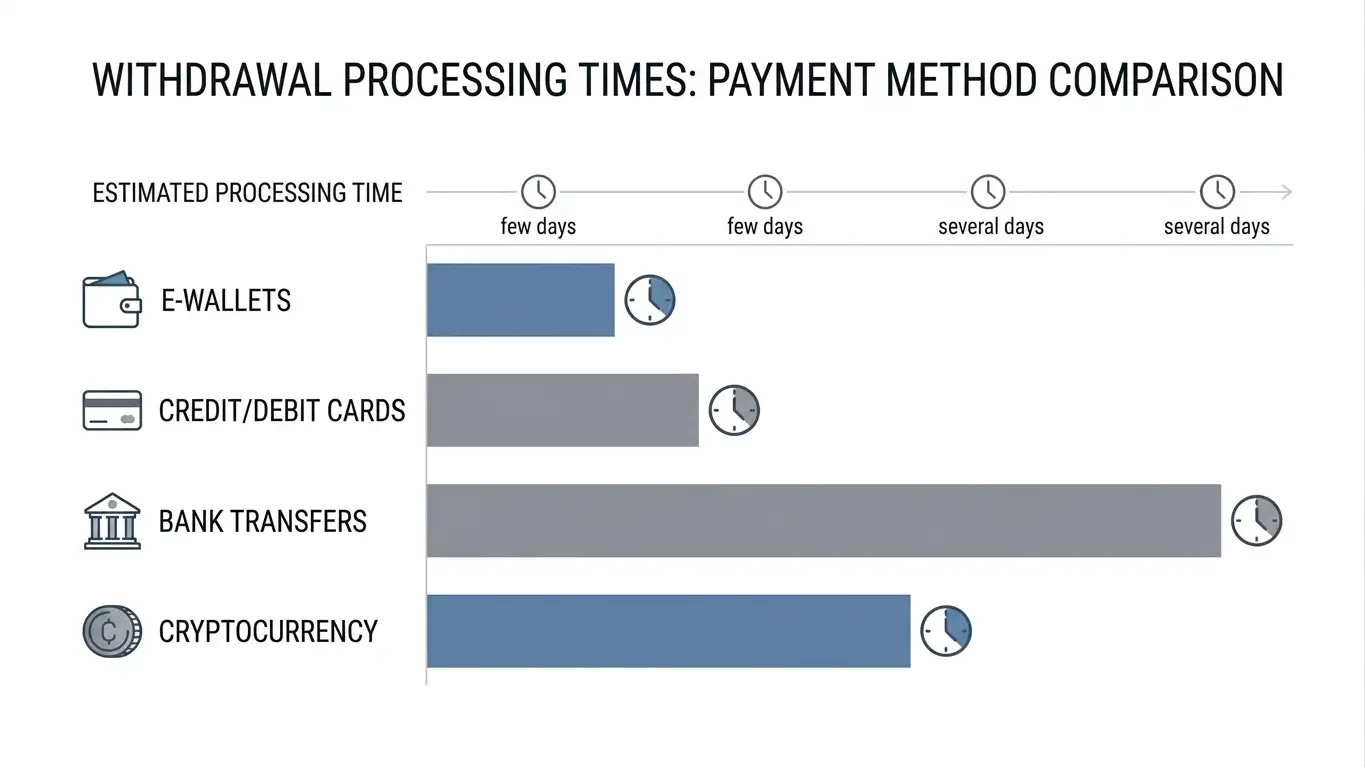
Traditional bank transfers remain available at some offshore casinos but have been eclipsed by PayID in speed and convenience. BPAY, Australia’s bill-payment system launched in 1997, takes 1 to 2 business days for deposits and withdrawals—usable but slow compared to PayID’s instant settlement. Trustly, a Swedish open-banking provider, offers instant deposits in select markets but has limited acceptance at Australian-facing casinos. Direct bank transfer (manual BSB and account number entry) works everywhere but requires the casino to manually match your payment to your account, adding 6 to 24 hours to the process.
PayID, covered earlier, is technically a bank transfer method but operates on the New Payments Platform with sub-60-second settlement. BPAY and direct transfers use older clearing rails (bulk settlement, not real-time), which explains the 1-to-2-day lag. For Australian players in 2026, BPAY functions as a backup when a specific casino does not list PayID. If both are available, PayID is faster and equally free.
BPAY
BPAY is Australia’s original bill-payment infrastructure, operated by Australian Payments Plus (the same entity that manages the NPP and PayID). Launched in October 1997, BPAY was designed for paying utilities, phone bills, and council rates—services that bill regularly and settle in batch mode once or twice daily. Some offshore casinos adapted BPAY for casino deposits by registering as BPAY billers and issuing unique reference numbers to players.
The process: at the casino cashier, you select BPAY. The casino displays a BPAY biller code (a unique number identifying the casino in the BPAY system) and a customer reference number (unique to your casino account). You open your Australian banking app, navigate to “Pay a Bill” or “BPAY payment,” enter the biller code and reference number, specify the amount, and submit. Settlement takes 1 to 2 business days. The casino credits your balance once the payment clears.
Withdrawals via BPAY, when supported, also take 1 to 2 business days. The casino initiates a BPAY refund to your registered BPAY details, and your bank posts the credit within two business days. Fees are typically zero from both the bank and the casino, though some casinos impose a small BPAY processing fee (check the cashier before depositing).
Casino acceptance in 2026 is around 20–30%, down from 40–50% in 2020 as operators transitioned to PayID. BPAY still works, but most players find the 1-to-2-day wait unacceptable when PayID delivers the same bank-to-casino transfer in under a minute. Use BPAY as a fallback if your preferred casino does not list PayID and you want to avoid card blocks or e-wallet fees.
Trustly
Trustly is a Swedish payment provider using open-banking APIs to facilitate instant bank transfers. In Europe, Trustly dominates online-casino deposits because it connects directly to bank accounts without requiring card details or e-wallet intermediaries. Australian adoption is limited—Trustly’s integration with Australian banks lags behind its European coverage, and most offshore casinos serving Australians have not prioritized Trustly because PayID already solves the instant-bank-transfer need.
When Trustly is available, deposits are instant (you log into your bank via Trustly’s secure interface, authorise the payment, settlement happens in real time). Withdrawals take 1 to 3 business days. Fees are usually zero to the player, though some casinos pass a small Trustly transaction fee through. Acceptance at Australian-facing casinos is under 20% as of 2026.
Direct Bank Transfer
Direct bank transfer means manually entering the casino’s BSB and account number, initiating a transfer from your banking app, and including a unique reference code in the description field. The casino receives the payment within 1 to 3 business days (depending on the receiving bank’s location and clearing network) and manually matches it to your account using the reference code. If you forget the reference code or enter it incorrectly, the payment lands in a suspense account, and you must contact casino support with proof of transfer. Manual matching adds 6 to 24 hours.
This method is universally available (every casino has a bank account) but slower and more error-prone than PayID. Use it only when PayID, crypto, e-wallets, and BPAY are all unavailable. Fees are zero from your bank (standard domestic transfer), but the casino may charge a processing fee for manual reconciliation.
Mobile Payment Methods: Apple Pay and Google Pay
Apple Pay and Google Pay are mobile wallets that tokenize your Visa or Mastercard debit card for one-tap payments via NFC (contactless) or online checkout. At a casino cashier, you select Apple Pay or Google Pay, authenticate with Face ID, Touch ID, or fingerprint, and the payment processes instantly—if the underlying card is not blocked. The problem: Apple Pay and Google Pay are convenience layers on top of card payments, not independent payment methods. When your bank blocks your debit card at MCC 7995 (gambling merchants), Apple Pay and Google Pay inherit the same block.
Casino acceptance is low—around 10–15% of offshore operators list Apple Pay or Google Pay as deposit options in 2026. When listed, deposits are instant. Withdrawals are not supported (Apple Pay and Google Pay are push-payment systems; they cannot receive funds). If you deposited via Apple Pay, you must nominate an alternative method (PayID, crypto, e-wallet) for withdrawals.
Apple Pay
Apple Pay launched in October 2014 and became available in Australia in November 2016. It links your Visa or Mastercard debit card to your iPhone, iPad, or Apple Watch. When you pay at a casino (or any online merchant), Apple Pay generates a one-time token instead of transmitting your actual card number, reducing fraud risk. The transaction still routes through the Visa or Mastercard network and carries the merchant category code assigned by the casino’s payment processor.
If NAB, CommBank, Westpac, or ANZ blocks your debit card at MCC 7995, Apple Pay will also be declined. The tokenization provides security, not a workaround. Some players report that Apple Pay occasionally clears when the direct card is declined, likely because the casino’s processor routes Apple Pay transactions under a different merchant descriptor or MCC. This is inconsistent and unreliable—do not count on it.
Casino acceptance is around 10–15%. When it works, deposits are instant. Withdrawals are not supported. Apple Pay is iOS-only (iPhone, iPad, Mac, Apple Watch). If your Apple Pay deposit is declined, the issue is your bank’s gambling-merchant block, not Apple Pay itself. Switch to PayID or crypto.
Google Pay
Google Pay (formerly Android Pay) launched in September 2015 and became available in Australia in 2016–2017 across major banks. It functions identically to Apple Pay: links your Visa or Mastercard to your Android phone, tokenizes transactions, one-tap checkout. Same merchant-code inheritance, same bank blocks. If your debit card is blocked at MCC 7995, Google Pay will also be declined.
Casino acceptance mirrors Apple Pay—around 10–15%, deposit-only, instant when accepted. Google Pay works on Android devices (phones, tablets, Wear OS watches). Like Apple Pay, it is not a workaround for card blocks. If declined, use PayID or crypto.
Deposit Limits and Minimum Amounts
Offshore casinos set minimum deposit thresholds per payment method, typically ranging from $10 to $20 AUD. Marketing claims like “$1 minimum deposit casino” exist, but practical limits are higher. A $1 deposit via Bitcoin, for example, would incur a $1 to $5 network fee, making the transaction economically irrational. Most payment methods and casinos impose a $10 minimum as the effective floor.
The table below shows typical minimum deposits by payment method at Australian-facing offshore casinos in 2026. Exact minimums vary by operator—check the cashier before depositing.
| Payment Method | Typical Minimum Deposit | Notes |
|---|---|---|
| PayID | $10 | Standard across most casinos |
| Cryptocurrency (BTC, ETH, USDT, LTC) | $10–$20 | Network fees make sub-$10 deposits impractical |
| Debit Cards (Visa, Mastercard) | $10–$20 | When accepted; many decline due to bank blocks |
| E-Wallets (Skrill, Neteller) | $10 | Standard minimum |
| Prepaid Vouchers (Neosurf, Paysafecard) | $10 | Matches smallest voucher denomination |
| BPAY | $20 | Higher minimum due to batch-settlement processing |
| Apple Pay / Google Pay | $10–$20 | Rarely accepted; minimums mirror card deposits |
No-minimum-deposit promotions occasionally appear but refer to bonus eligibility, not payment-method floors. A “no minimum deposit bonus” means the bonus activates on any deposit amount above the payment method’s technical minimum (usually $10). The payment method itself still enforces its floor.
Maximum deposit limits vary widely. PayID is capped by your bank’s daily NPP limit ($1,000 to $10,000 typically). Cryptocurrency has no hard cap but may trigger enhanced KYC at the casino if you deposit large amounts in a single transaction. E-wallets impose daily or monthly limits based on your account verification level. Cards, when accepted, carry your bank’s transaction limit. Check the cashier for specific maximums.
What is the minimum deposit amount at Australian online casinos?
The practical minimum deposit at most Australian-facing offshore casinos is $10 AUD. PayID, cryptocurrency, e-wallets, and prepaid vouchers typically enforce a $10 floor. BPAY minimums are often $20 due to batch-settlement processing costs. Some casinos advertise $1 or $5 minimums, but payment-method fees (crypto network fees, voucher purchase fees) make deposits below $10 uneconomical. Plan on $10 as the effective minimum regardless of marketing claims.
Withdrawal Speed Comparison: What to Expect in 2026
Withdrawal speed depends on two factors: the casino’s internal processing time (pending period during which they review the request), and the payment method’s settlement time (how long the money takes to reach you once the casino releases it). Casinos impose pending periods of 24 to 48 hours on most players, ostensibly for fraud checks, practically to allow a reversible window where you might cancel the withdrawal and keep playing. VIP players often skip the pending period entirely.
The table below ranks payment methods by total withdrawal time (casino processing plus settlement) based on tested examples and stated benchmarks from Australian-facing casinos in 2026.
| Payment Method | Casino Processing (Pending) | Settlement Time | Total Withdrawal Time | Tested Examples (2026) |
|---|---|---|---|---|
| Cryptocurrency | 1–24 hours | 10–60 minutes (on-chain) | Under 2 hours (often < 1 hour) | BTC/USDT: 30–60 min typical |
| PayID | 1–24 hours | Instant (< 15 seconds via NPP) | 25 min – 4 hours | Hell Spin 25 min, Lucky7 35 min, LuckyVibe < 1 hr |
| E-Wallets (Skrill, Neteller) | 1–24 hours | Instant (e-wallet receives) | 1–6 hours | Average ~3 hours to e-wallet |
| BPAY | 1–24 hours | 1–2 business days | 2–3 business days | Rarely used for withdrawals |
| Debit Cards | 1–24 hours | 3–5 business days (card refund) | 4–6 business days | Many casinos do not support AU card withdrawals |
Crypto is the fastest payment method when you need money in your wallet immediately. PayID is the fastest when you need money in your Australian bank account (crypto requires an additional 1–3 days to convert at an exchange and withdraw to AUD). E-wallets land funds in your Skrill or Neteller account within hours, but cashing out from the e-wallet to your bank adds 1–3 days and costs 6–7% in fees.
Pending periods are the hidden delay. A casino that advertises “instant PayID withdrawals” might still hold your request for 24 hours in pending status before releasing it to the NPP. Total time: 24 hours plus PayID’s 15 seconds, so roughly 24 hours. VIP players, verified accounts with withdrawal history, and casinos with reputation for fast payouts (Hell Spin, Lucky7, LuckyVibe tested in 2026) process withdrawals faster. First-time withdrawals always take longer due to KYC verification.
Under 1 Hour Withdrawals
Cryptocurrency achieves sub-one-hour withdrawals most consistently. Bitcoin and USDT (TRC-20) cashouts tested in 2026 cleared in 30 to 60 minutes from withdrawal request to wallet confirmation. PayID withdrawals at the fastest casinos (Hell Spin 25 minutes, Lucky7 35 minutes) also land under one hour. E-wallets rarely clear under one hour—the 1-to-6-hour range is typical, with most landing around 3 hours.
To maximize your chances of a sub-one-hour withdrawal: use cryptocurrency or PayID, complete KYC verification before your first deposit (not after you win), choose a casino with reputation for fast payouts (check reviews), and play during business hours (withdrawals submitted at 2 AM may sit in queue until staff come online).
Same-Day Payouts
Same-day payouts are standard for cryptocurrency, PayID, and e-wallets. Crypto and PayID typically deliver same-day even for first-time withdrawals. E-wallets (Skrill, Neteller) almost always land same-day unless the casino’s pending period extends past midnight. BPAY and cards do not clear same-day—BPAY takes 1–2 business days, cards take 3–5 business days.
VIP programs at some casinos skip the pending period entirely, bringing total withdrawal times down to the settlement speed of the payment method: under 30 minutes for crypto, under 1 hour for PayID, 1–3 hours for e-wallets.
Pending Periods Explained
The pending period is the time between when you submit a withdrawal request and when the casino releases the payment to your chosen method. During this window, you can cancel the withdrawal and return the funds to your casino balance. Casinos impose pending periods for two reasons: fraud prevention (verifying the withdrawal is legitimate) and player retention (hoping you reverse the withdrawal and keep playing).
Standard pending periods range from 24 to 48 hours. Some casinos process withdrawals within 1 to 6 hours if you are a verified player with withdrawal history. VIP players often get instant or same-hour processing. First-time withdrawals always take longer because the casino manually reviews your KYC documents (passport, driver’s license, proof of address) before approving the payout.
You cannot skip the pending period on your first withdrawal—every licensed casino (Curaçao, Malta, Anjouan) requires KYC before paying out under AML obligations. The workaround: upload your KYC documents immediately after registering, before you deposit. The casino verifies them within 24 to 72 hours. When you later request a withdrawal, your account is already verified, and the casino processes the payout faster. Waiting until after you win to upload documents adds 1 to 3 days to your cashout.
KYC and Identity Verification for Australian Players
Every licensed offshore casino requires identity verification (KYC: Know Your Customer) before your first withdrawal. This is not optional, not negotiable, and not a red flag—it is a legal obligation under the casino’s AML (anti-money-laundering) and CTF (counter-terrorism financing) license conditions. The casino must verify you are who you claim to be, you are of legal gambling age, and the funds being withdrawn belong to you.
KYC typically requires three documents: proof of identity (passport or driver’s license), proof of address (utility bill, bank statement, or government letter dated within the last three months), and occasionally proof of payment method (screenshot of your bank account showing your name and the deposit transaction, or a photo of your debit card with middle digits obscured). You upload these documents through the casino’s account settings or email them to support. Verification takes 24 to 72 hours on average, though some casinos process within 6 to 12 hours.
The privacy spectrum: payment methods differ in how much your Australian bank sees, not in whether the casino sees your identity. Cryptocurrency and prepaid vouchers keep the casino name off your bank statement (your bank sees CoinSpot or Coles, not the casino), but the casino still collects your passport, address, and proof of funds before paying out. E-wallets (Skrill, Neteller) add a buffer layer so your bank sees “Skrill” instead of the casino, but the e-wallet and the casino both have your KYC documents. PayID shows the casino’s payee name on your bank statement, and the casino has your KYC documents. Cards, when they work, show the casino or a processor name on your statement, and the casino has your KYC documents.
The takeaway: no payment method eliminates KYC. The differences are in statement visibility, not in anonymity from the casino. “Anonymous casino” marketing is misleading—offshore casinos licensed in Curaçao, Malta, or Anjouan are not anonymous. Blockchain transactions (Bitcoin, Ethereum) are pseudonymous (wallet addresses are public, but your identity is not directly on-chain), but the casino still verifies your identity before paying out.
Upload KYC documents early. Do not wait until you win and request a withdrawal. Casinos hold withdrawals until verification completes, adding 1 to 3 days to your payout. Upload your passport and proof of address immediately after registering. The casino verifies them in the background while you play. When you later win and request a withdrawal, your account is already verified, and the payout processes within hours instead of days.
Do I need to verify my identity (KYC) before withdrawing from an online casino?
Yes. Every licensed offshore casino (Curaçao, Malta, Anjouan) requires identity verification before your first withdrawal under AML and CTF regulations. You must upload proof of identity (passport or driver’s license), proof of address (utility bill or bank statement dated within three months), and occasionally proof of payment method (screenshot showing your name and deposit transaction). Verification takes 24 to 72 hours. Upload documents immediately after registering, not after you win, to avoid delaying your withdrawal.
How to Choose the Best Payment Method for You
The best payment method depends on your priority: speed, privacy, cost, or working around bank blocks. No single method wins every category. PayID is fastest and free but shows the casino on your bank statement. Cryptocurrency is fastest for withdrawals and bypasses bank blocks but introduces price volatility. E-wallets add privacy but cost 6–7% in fees. Prepaid vouchers impose hard budget limits but cost 3.5–15% upfront. Cards are familiar but blocked by major Australian banks.
The decision framework below matches priorities to payment methods.
If Speed is Priority
Fastest withdrawal to your wallet: Cryptocurrency (Bitcoin, USDT). Cashouts clear in under an hour, often 30 to 60 minutes. Network fees are $0.01 to $5. Price volatility applies—convert to AUD quickly after withdrawal unless you plan to hold crypto.
Fastest withdrawal to your Australian bank account: PayID. Same-day settlement (25 minutes to 4 hours tested in 2026). Zero fees. No volatility. Requires your casino account name to match your bank account name exactly (common KYC issue).
Fastest deposit: PayID (instant, under 60 seconds). Crypto is second (10–30 minutes for confirmation). E-wallets and cards are also instant but face blocks or fees.
If Privacy is Priority
Privacy from your Australian bank: Cryptocurrency or prepaid vouchers (Neosurf, Paysafecard). Your bank sees a CoinSpot purchase or a Coles purchase, not the casino. E-wallets (Skrill, Neteller) also buffer the casino name—your bank sees “Skrill” on the statement. Cost: crypto has network fees ($0.01–$5), vouchers have purchase fees (3.5–15%), e-wallets have withdrawal fees (~6–7%).
Anonymous gambling: Does not exist at licensed casinos. Every offshore operator requires KYC before withdrawal. Blockchain transactions are pseudonymous (wallet addresses are public, identity is off-chain), but the casino still verifies your identity. Privacy applies to your bank statement, not to the casino’s KYC records.
If Fees Matter Most
Zero-fee methods: PayID (free from banks and casinos). Cryptocurrency (network fees $0.01–$5, not percentage-based). Debit cards when accepted (zero casino fee, but currency conversion applies if casino processes in USD/EUR).
Avoid if minimizing fees: E-wallets (Skrill, Neteller cost ~6–7% total when withdrawing to AUD bank). Prepaid vouchers (Neosurf, Paysafecard cost 3.5–15% purchase fee). These are the most expensive methods.
If You’re Bank-Blocked
Workarounds when NAB, CommBank, Westpac, or ANZ blocks your debit card: PayID (bypasses card networks and MCC codes entirely). Cryptocurrency (no Australian bank involved until you convert back to AUD at an exchange). E-wallets (Skrill, Neteller—load the e-wallet once from your bank, then use e-wallet balance for casino deposits; your bank does not see subsequent casino transactions).
Do not attempt: Repeated card retries (flags your account for fraud review). Apple Pay or Google Pay (they inherit the same card blocks). Alternative cards from the same bank (the block is bank-policy, not card-specific).
The practical recommendation for most Australian players in 2026: use PayID for deposits (instant, free, widely accepted) and cryptocurrency or PayID for withdrawals depending on whether you prioritize speed-to-wallet (crypto) or speed-to-bank-account (PayID). Set up both methods before you start playing. If your bank blocks cards, skip cards entirely—PayID and crypto work reliably and cost less than e-wallets or vouchers.
Casino Deposit Methods Australia 2026 — Full Comparison
Content created by the «ReelBank» team